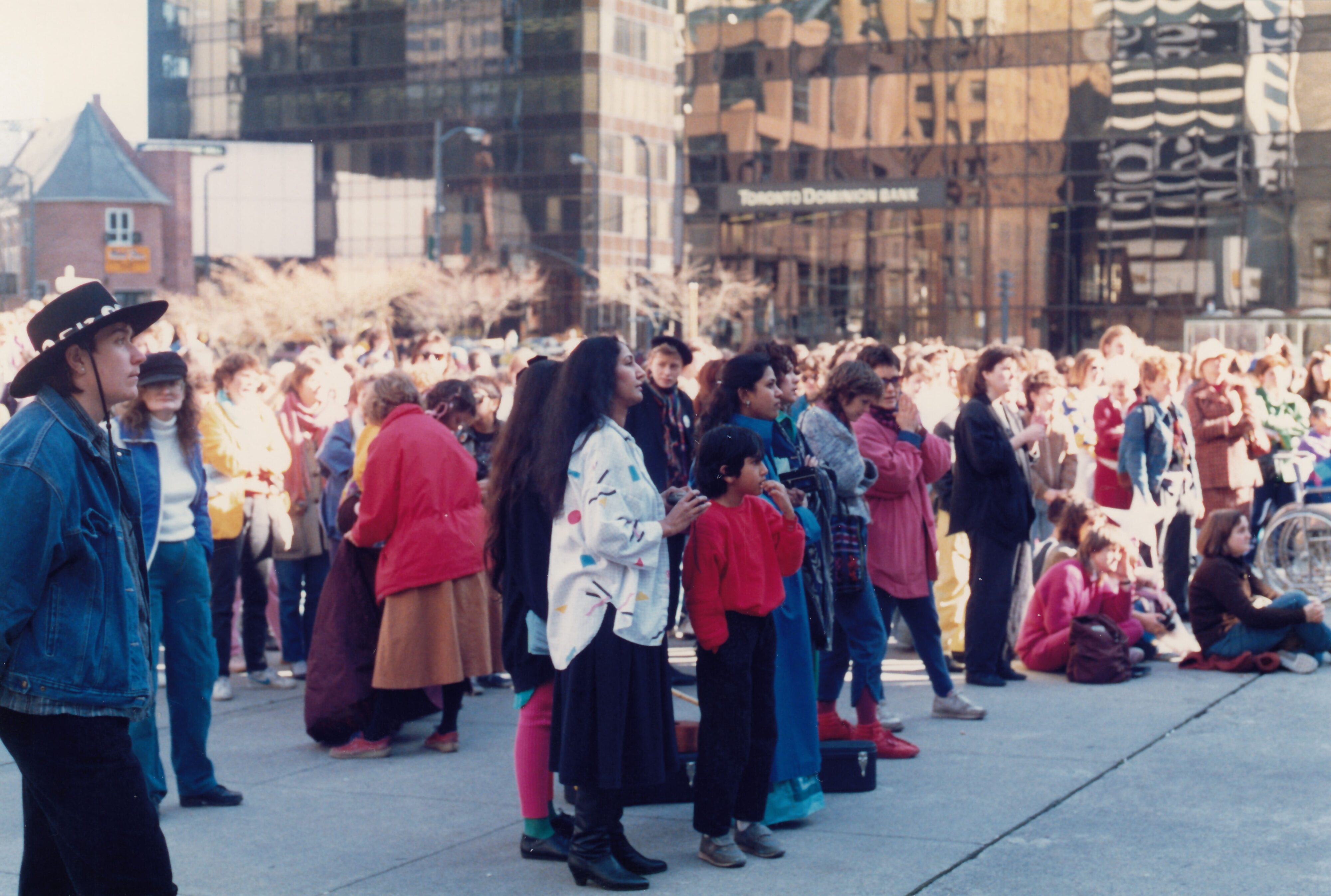
A generation of local cultural activists ruminate over their lives and activism in British Columbia’s Lower Mainland. The memories of intercommunity activism center on an episode of self-organization by Punjabi Canadian farmworkers, mostly women. Reflection and introspection gradually unravel the structural reality of gender inequality reproducing itself in the activism spectrum. Unlike the visual archive of rallies and picket lines, the gendered experience of organizing did not lend itself to an image. The image forms tangible evidence four decades later, shaping the movement’s memory. What remains undocumented in the movement’s arts goes unrepresented in the movement’s memory.
Stay tuned for upcoming screenings!
Ajay Bhardwaj is a filmmaker and scholar whose work meditates on the relationship between aesthetic and subversive, art and identity, and history and memory. In his long stint as a documentary filmmaker, he explored the northwestern state of Punjab in India for a decade. This phase culminated in his Punjab trilogy—a set of documentaries located at the intersection of Dalit religiosity, performance traditions, and memories of partition. Bhardwaj is a recipient of the Public Scholars Award at the University of British Columbia, where he recently completed his PhD on South Asian Left-wing cultural activism in British Columbia. The doctoral documentary, “When the Tide Goes Out,” accompanying his dissertation that examines representational absences in multimedia archive, has been selected for screening at the Vancouver International South Asian Film Festival 2022.